


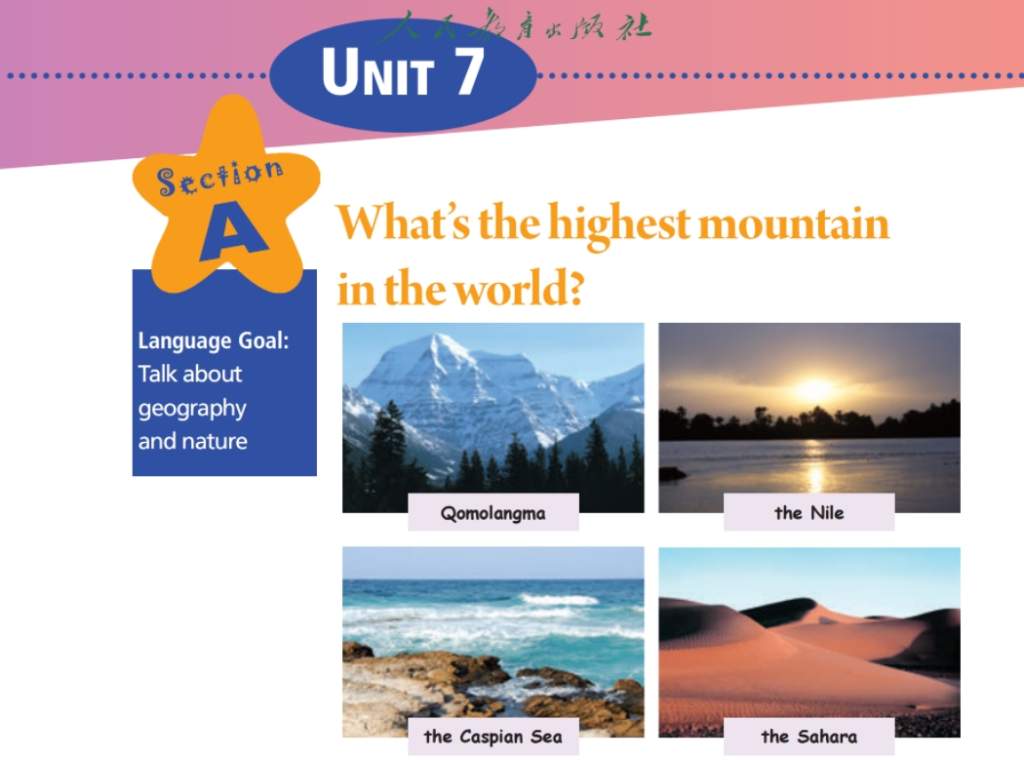
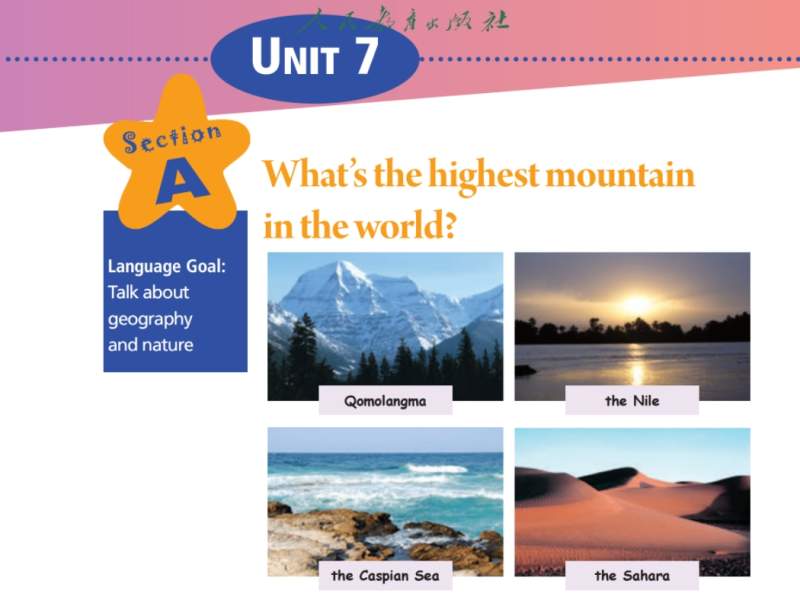
Unit 7 What’s the highest mountain in the world?
Section A
1b Listen and complete the sentences.
听录音,完成句子。
Teacher:Yesterday, we learned some important geographical facts.
老师:昨天,我们学了一些重要的地理事实。
I hope you all still remember them.
我希望你们都还记得。
I’m going to test you now by asking a few questions.
现在我将问几个问题测验你们。
First, what’s the highest mountain in the world?
第一,世界上最高的山是什么?
Boy 2:Qomolangma!
男孩2:珠穆朗玛峰!
It’s higher than any other mountain in the world.
它比世界上其他的山峰都高。
Teacher:That’s right.
老师:正确。
And who can tell me what the Sahara is?
谁能告诉我撒哈拉沙漠是什么?
Girl 1:The Sahara is the biggest desert in the world.
女孩1:撒哈拉沙漠是世界上最大的沙漠。
Teacher:Very good.
老师:很好。
And which is the deepest salt lake in the world?
世界上最深的咸水湖是哪一个?
Girl 2:The Caspian Sea is the deepest of all the salt lakes.
女孩2:里海是所有咸水湖中最深的。
Teacher:You’re all so smart!
老师:你们都这么聪明!
Now, for the last question, which is the longest river in the world?
现在问最后一个问题,世界上最长的河是哪一条?
Boy 1:I know!
男孩1:我知道!
The Nile is the longest river in the world.
尼罗河是世界上最长的河。
Boy 2:And the Amazon is the second longest river in the world.
男孩2:亚马逊河是世界上第二大长河。
Teacher:It seems that you know the answers to all my questions.
老师:看起来你们知道所有问题的答案。
Good job!
干得不错!
2a Listen and number the facts [1-4] in the order you hear them.
听录音,然后把下面的事实按照你听到的顺序用 [1~4]标出来。
Mike:Hi, I’m Mike.
迈克:你们好,我叫迈克。
I’m from the United States.
我来自美国。
Boy:Welcome to our class, Mike.
男孩:欢迎到我们的班级来,迈克。
We’re happy to meet you.
见到你我们非常高兴。
Mike:Can you tell me a bit more about China?
迈克:你们能告诉我关于中国更详细的情况吗?
Girl:Sure!
女孩:当然可以!
Did you know that China is one of the oldest countries in the world?
你知道中国是世界上最古老的国家之一吗?
It’s over 5,000 years old.
它有5 000多年的历史。
Mike:Yes, I did.
迈克:是的,我知道。
It’s much older than my country—in fact, the United States is one of the youngest countries in the world.
它比我的国家历史更悠久——事实上,美国是世界上最年轻的国家之一。
It’s not even 300 years old.
它的历史甚至不到300年。
Boy:And China has the biggest population, too.
男孩:中国也是人口最多的国家。
It’s a lot bigger than the population of the United States.
它比美国的人口多得多。
Mike:But China is about the same size as the US, right?
迈克:但是中国和美国差不多大,对吗?
Girl:Yes, and it’s the biggest country in Asia.
女孩:是的,它是亚洲最大的国家。
We also have some famous rivers.
我们也有一些著名的河流。
The Yangtze River is the longest river in Asia.
长江是亚洲最长的河流。
It’s about 6,300 kilometers long.
它大约6 300千米长。
Mike:Wow!
迈克:哇!
I didn’t know that.
我不知道这个。
I thought the Yellow River was longer.
我原以为黄河更长。
Boy:No, the Yellow River is 5,464 kilometers long.
男孩:不,黄河5 464千米长。
But both rivers are very important to China.
但是两条河对中国都非常重要。
2b Listen again and fill in the blanks in 2a with the numbers in the box.
再听一遍录音,用方框中的数字填写2a中的空格。
Mike:Hi, I’m Mike.
迈克:你们好,我叫迈克。
I’m from the United States.
我来自美国。
Boy:Welcome to our class, Mike.
男孩:欢迎到我们的班级来,迈克。
We’re happy to meet you.
见到你我们非常高兴。
Mike:Can you tell me a bit more about China?
迈克:你们能告诉我关于中国更详细的情况吗?
Girl:Sure!
女孩:当然可以!
Did you know that China is one of the oldest countries in the world?
你知道中国是世界上最古老的国家之一吗?
It’s over 5,000 years old.
它有5 000多年的历史。
Mike:Yes, I did.
迈克:是的,我知道。
It’s much older than my country—in fact, the United States is one of the youngest countries in the world.
它比我的国家历史更悠久——事实上,美国是世界上最年轻的国家之一。
It’s not even 300 years old.
它的历史甚至不到300年。
Boy:And China has the biggest population, too.
男孩:中国也是人口最多的国家。
It’s a lot bigger than the population of the United States.
它比美国的人口多得多。
Mike:But China is about the same size as the US, right?
迈克:但是中国和美国差不多大,对吗?
Girl:Yes, and it’s the biggest country in Asia.
女孩:是的,它是亚洲最大的国家。
We also have some famous rivers.
我们也有一些著名的河流。
The Yangtze River is the longest river in Asia.
长江是亚洲最长的河流。
It’s about 6,300 kilometers long.
它大约6 300千米长。
Mike:Wow!
迈克:哇!
I didn’t know that.
我不知道这个。
I thought the Yellow River was longer.
我原以为黄河更长。
Boy:No, the Yellow River is 5,464 kilometers long.
男孩:不,黄河5 464千米长。
But both rivers are very important to China.
但是两条河对中国都非常重要。
Section A Activity 2D
Role-play the conversation.
角色扮演对话。
Feel free to ask me anything on today’s Great Wall tour.
关于今天的长城之旅,请随时向我提问。
How long is the wall?
长城有多长?
Ah, the most popular question.
啊,最常被问到的问题。
If we’re only talking about the parts from the Ming Dynasty, it’s about 8,850 km long.
如果我们只算明朝时期修建的部分,它大约有8,850公里长。
This makes it the longest wall in the world.
这使它成为世界上最长的城墙。
Wow, that’s amazing!
哇,太神奇了!
Why did the ancient emperors build the wall?
古代皇帝为什么要建造长城?
The main reason was to protect their part of the country.
主要原因是为了保护国家的这部分领土。
As you can see, it’s quite tall and wide.
如你所见,它又高又宽。
As far as I know, there are no man-made objects as big as this.
据我所知,没有比这更大的人造建筑了。
Is Badaling part of the Ming Great Wall?
八达岭是明长城的一部分吗?
Yes, it’s the most famous part.
是的,这是最著名的部分。
Section A Activity 3A
Read the article and match each paragraph with the main ideas.
阅读文章,并将每一段与主要思想相匹配。
Chomolungma: The Most Dangerous Mountain in the World
珠穆朗玛峰:世界上最危险的山
One of the world’s most dangerous sports is mountain climbing, and one of the most popular places for this is the Himalayas.
世界上最危险的运动之一是登山,而最受欢迎的地点之一是喜马拉雅山脉。
The Himalayas run along the southwestern part of China.
喜马拉雅山脉沿中国西南部延伸。
Of all the mountains, Chomolungma rises the highest and is the most famous.
在所有山脉中,珠穆朗玛峰最高也最著名。
It is 8,844.43 meters high and so is very dangerous to climb.
它高8844.43米,因此攀登极其危险。
Thick clouds cover the top and snow can fall very hard.
峰顶浓云覆盖,降雪可能非常猛烈。
Even more serious difficulties include freezing weather conditions and heavy storms.
更严峻的困难包括严寒的天气条件与强烈暴风雪。
It is also very hard to take in air as you get near the top.
随着接近峰顶,呼吸也会变得异常困难。
The first people to reach the top were Tenzing Norgay and Edmund Hillary on May 29, 1953.
首批登顶者是丹增·诺尔盖和埃德蒙·希拉里,时间为1953年5月29日。
The first Chinese team did so in 1960.
中国登山队于1960年首次登顶。
While the first woman to succeed was Junko Tabei from Japan in 1975.
而首位成功的女性是日本登山家田部井淳子1975年登顶。
Why do so many climbers risk their lives?
为何众多攀登者愿冒生命危险?
One of the main reasons is because people want to challenge themselves in the face of difficulties.
主要原因之一是人们渴望在困境中挑战自我。
The spirit of these climbers shows us that we should never give up trying to achieve our dreams.
攀登者的精神启示我们:永远不该放弃实现梦想的努力。
It also shows that humans can sometimes be stronger than the forces of nature.
这也证明人类有时能战胜自然之力。
Section B
1b Listen and check(√)the numbers you hear.
听录音,在你听到的数字前打√。
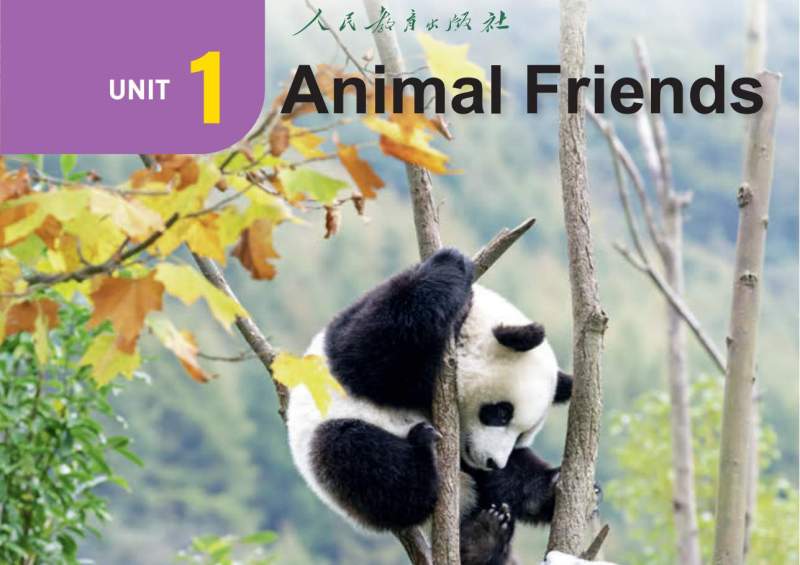
Teacher:Do you have any questions about baby pandas?
老师:关于大熊猫宝宝你们有问题吗?
Boy 1:Are they much smaller than an adult panda?
男孩1:它们比成年大熊猫小很多吗?
Teacher:Yes. When they’re born, they only weigh about 0.1 to 0.2 kilos.
老师:是的。它们出生时,大约0.1到0.2公斤重。
Boy 1:Wow, that’s small! I know an adult panda weighs many times more than a baby.
男孩1:哇,那么小!我知道成年大熊猫比幼崽重许多倍。
Teacher:That’s right. And adult pandas weigh about 100 kilos.
老师:你说得对。成年大熊猫重约100公斤。
Boy 2:What about the size of a baby panda? How small is it?
男孩2:大熊猫幼崽的大小呢?它有多小?
Teacher:At birth, it’s only around 15 cm long, but an adult is around 150 cm long.
老师:出生时,它大约只有15厘米长,但成年大熊猫约150厘米长。
Girl 1:Is a baby panda also black and white?
女孩1:大熊猫幼崽也是黑白色的吗?
Teacher:No, you would never guess! A baby panda is pink and it cannot see. It also doesn’t have any teeth.
老师:不,你绝对猜不到!幼崽是粉红色的,看不见东西,而且没有牙齿。
Girl 1:How long can pandas live?
女孩1:大熊猫能活多久?
Teacher:They can live up to 20 to 30 years.
老师:它们能活20到30年。
1c Listen again and complete the sentences.
再听一遍录音,完成句子。
Teacher:Do you have any questions about baby pandas?
老师:关于大熊猫宝宝你们有问题吗?
Boy 1:Are they much smaller than an adult panda?
男孩1:它们比成年大熊猫小很多吗?
Teacher:Yes. When they’re born, they only weigh about 0.1 to 0.2 kilos.
老师:是的。它们出生时,大约0.1到0.2公斤重。
Boy 1:Wow, that’s small! I know an adult panda weighs many times more than a baby.
男孩1:哇,那么小!我知道成年大熊猫比幼崽重许多倍。
Teacher:That’s right. And adult pandas weigh about 100 kilos.
老师:你说得对。成年大熊猫重约100公斤。
Boy 2:What about the size of a baby panda? How small is it?
男孩2:大熊猫幼崽的大小呢?它有多小?
Teacher:At birth, it’s only around 15 cm long, but an adult is around 150 cm long.
老师:出生时,它大约只有15厘米长,但成年大熊猫约150厘米长。
Girl 1:Is a baby panda also black and white?
女孩1:大熊猫幼崽也是黑白色的吗?
Teacher:No, you would never guess! A baby panda is pink and it cannot see. It also doesn’t have any teeth.
老师:不,你绝对猜不到!幼崽是粉红色的,看不见东西,而且没有牙齿。
Girl 1:How long can pandas live?
女孩1:大熊猫能活多久?
Teacher:They can live up to 20 to 30 years.
老师:它们能活20到30年。
Section B Activity 2B
Scan the article to find out what these numbers mean: 10, 12, 200, 2000
扫描文章以了解这些数字的含义:10、12、200、2000
It is 8:30 a.m. at the Chengdu Research Base.
现在是上午8点30分,在成都研究基地。
Lin Wei and the other panda keepers are preparing the milk for the baby pandas’ breakfast.
林伟和其他熊猫饲养员正在为熊猫宝宝的早餐准备牛奶。
At 9 a.m., they find that most of the babies are already awake and hungry.
早上9点,他们发现大多数熊猫宝宝已经醒了并且饿了。
When the babies see the keepers, they run over with excitement and some of them even walk into their friends and fall over.
当熊猫宝宝看到饲养员时,它们兴奋地跑过来,其中一些甚至撞到同伴摔倒了。
They’re so cute and lovely. I take care of them like they’re my own babies.
它们太可爱了。我像照顾自己的孩子一样照顾它们。
I wash, feed and play with them every day. They’re very special to me.
我每天给它们洗澡、喂食和玩耍。它们对我来说很特别。
Lin Wei loves her job, but it is a difficult one.
林伟热爱她的工作,但这是一项困难的工作。
Pandas do not have many babies, maybe only one every two years.
熊猫繁殖率很低,可能每两年才产一只幼崽。
The babies often die from illnesses and do not live very long.
幼崽常常死于疾病且存活率不高。
Adult pandas spend more than 12 hours a day eating about 10 kilos of bamboo.
成年熊猫每天花费超过12小时进食约10公斤竹子。
Many years ago, there were a lot more bamboo forests and pandas in China.
许多年前,中国有更多的竹林和熊猫。
But then humans started to cut down the forests.
但后来人类开始砍伐森林。
Scientists say there are now fewer than 2,000 pandas living in the remaining forests.
科学家表示现存野生大熊猫不足2000只。
Another 200 or so live in zoos or research centers in China and other countries.
另有约200只生活在国内外动物园或研究中心。
An education program in Chengdu teaches children about pandas and other endangered animals.
成都的教育项目向城市儿童普及熊猫及其他濒危动物知识。
They send people to schools to teach the importance of conservation.
工作人员到学校宣讲保护动物的重要性。
Children sing songs or make artwork about wildlife.
孩子们通过唱歌和制作艺术品学习野生动物知识。
Teaching children is one way to help save pandas.
儿童教育是保护熊猫的重要途径。
The Chinese government is also planting more bamboo to expand panda habitats.
中国政府正在种植更多竹子以扩大熊猫栖息地。
We all hope there will be many more pandas in the future.
我们都希望未来熊猫数量能大幅增长。
八年级下册 Unit 7单词
- square [skwea(r)] n. 平方,正方形
- meter [‘mi:ta] n. 米
- deep [di:p] adj. 深的
- desert [‘dezat] n. 沙漠
- population [I popju’leiʃan] n. 人口(数量),全体居民
- Asia [‘eI3a] n. 亚洲
- feel free (可以)随便(做某事)
- tour [tua] n. 旅行,观光
- tourist 观光者,旅行者
- wall [wo:l] n. 墙
- amazing [ə’meIZIŋ] adj. 令人惊异的
- ancient [‘eInʃant] adj. 古代的,古老的
- protect [pra’tekt] v. 保护
- wide [waɪd] adj. 宽的,广阔的
- as far as I know 就我所知
- man-made adj. 人造的
- achievement [ə’tʃi:vmənt] n. 成就,成绩
- southwestern [sauθ’westən] adj. 西南的,西南方向的
- thick [θIk] adj. 厚的,浓的
- include [ɪn’klu:d] v. 包括,包含
- freezing [‘fri:zIŋ] adj. 极冷的,冷冻的
- condition [kən’dIʃn] n. 条件,状况
- take in 吸入,吞入
- succeed[sak’si:d] v.成功,实现目标,完成
- challenge [tʃælɪndʒ] n.& v.挑战,考验
- in the face of 面对(问题,困难)
- achieve [ə’tʃi:v] v.完成,实现
- force [fɔ:s] n.力,力量
- nature [‘neɪtʃə(r)] n.自然界,大自然
- even though (=even if) 即使,虽然
- ocean [‘əʊʃn] n.海洋
- the Pacific Ocean 太平洋
- cm (=centimeter) [‘sentiˌmiːta] n.厘米
- weigh [wei] v.称…重量
- birth [b3:θ] n.出生,诞生
- at birth 出生时
- up to 到达(某数量,程度),不多于
- adult [‘ə’dʌlt] n.成年人
- bamboo [baem’bu:] n.竹子
- endangered [ɪn’deɪndʒəd] adj.有危险的,濒临灭绝的,濒危的
- research [rɪ’sɜːtʃ] n.& v.研究,调查
- keeper [‘kiːpə(r)] n.饲养员,保管人
- awake [ə’weɪk] adj.醒着
- excitement [ɪk’saɪtmənt] n.激动,兴奋
- walk into 走路时撞到
- fall over 绊倒
- or so 大约
- illness [ˈɪlnəs] n.疾病,生病
- wild [waɪld] adj.野性的,野生的
- government [ˈgʌvənmənt] n.政府
- whale [weɪl] n.鲸
- protection [pra’tekʃn] n.保护,保卫
- huge [hju:dʒ] adj.巨大的,极多的










暂无评论内容